 Nepal is beautiful country. It has many interesting and lovely places. nepal is country which is very rich in natural resources.Biodiversity of Nepal is very interesting .Nepal has about 29% of forests areas and it is perfect location for different kinds of animals and birds. In Nepal There are different types of herbs , which are very impiortant for making medicines and other different things . There are Yarshamgumba, which found in mostly western part of northern part of Nepal:Jumla , Mustang, etc. It very important for making medicines.It gives energy if we eat by mixing with honey.It looks like grassin summer and insect in winter. There are many parks in Nepal : Chitwan National Park, Sagarmatha National Park, Bardiya National Park, etc . In these places different types of vegetations , animals, insects etc are conserved and protected. There are also rivers which are very strong. They flow with very high speed. Electricty is produced from riversin Nepal . Koshi rivers . the Bagmati river, Karnali river, the Gandaki riveratc are major river of Nepal.There are hills which are of different hight.They are the treasures of Nepal , they attract many Local as well as foreign tourists.
Sunday, November 15, 2009
Nepal's Nature
Wednesday, November 11, 2009
Tree
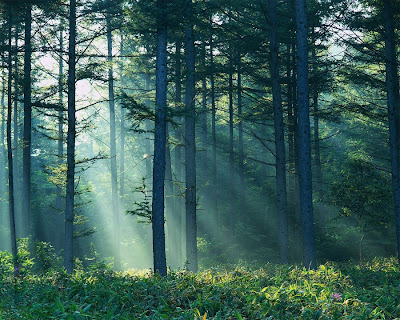
Temperate deciduous forests are forests in cool, rainy areas; they have trees that lose their leaves in Fall and regrow them in Spring. Temperate deciduous forests are found in the middle latitudes around the globe and have four distinct seasons: Spring, Summer, Fall, and Winter. In the Northern Hemisphere, these forests are found in North America, Europe, and Asia. In the Southern Hemisphere, there are smaller areas of these forests, in South America, Africa, and Australia. The growing season in these forests is about 6 months long.
Temperature and Precipitation: The average temperature in temperate deciduous forests is roughly 75°F (24°C) but gets as high as 86°F (30°C), depending on the altitude of the forest. Forests higher in the mountains are colder. Deciduous forests receive from 2 to 5 feet (0.5-1.5 m) of precipitation (both rain and snow) each year. Humidity in these forests is high, from 60% to 80%.
Fall Colors: In the Fall, the number of hours of daylight decreases. This causes some plants and trees (called deciduous) to stop producing chlorophyll (a green pigment that converts sunlight into chemical energy) and eventually lose their leaves. During this time, these leaves turn brilliant colors, ranging from red to orange to yellow to brown.
Soil: The soil in the deciduous
Temperature and Precipitation: The average temperature in temperate deciduous forests is roughly 75°F (24°C) but gets as high as 86°F (30°C), depending on the altitude of the forest. Forests higher in the mountains are colder. Deciduous forests receive from 2 to 5 feet (0.5-1.5 m) of precipitation (both rain and snow) each year. Humidity in these forests is high, from 60% to 80%.
Fall Colors: In the Fall, the number of hours of daylight decreases. This causes some plants and trees (called deciduous) to stop producing chlorophyll (a green pigment that converts sunlight into chemical energy) and eventually lose their leaves. During this time, these leaves turn brilliant colors, ranging from red to orange to yellow to brown.
Soil: The soil in the deciduous
Friday, November 6, 2009
Natural View
 When researching the safety of synthetic chemicals and other substances used in cosmetic and personal care products, one theme emerges: There are few, if any, definitive answers. This is partly due to the lack of scientific studies conducted on over 85% of the ingredients currently being used, or on the effects of combining the various chemicals. As you may already know, the American government does not require manufacturers to prove the safety of the chemicals they are using, and has very little power over the cosmetics and toiletries industry in general. So while these companies are likely testing the products to rule out potential skin reactions, they are not conducting the kind of research that would determine long-term effects such as cancer, infertility or neurological (i.e., brain) effects.
In other countries, however, and in laboratories around the world, studies have been conducted on animals to examine long-term consequences of exposure to these substances. The findings are grim: everything from increased susceptibility to breast cancer to a greater likelihood of infertility and even Parkinson's disease have been attributed to exposure to the chemicals many of us slather on, lather up, and spray all over our bodies on a daily basis. And yet, because there is no conclusive evidence that any of these substances are harmful, they remain on the market. In fact, the chemical and cosmetic industries spend millions of dollars to persuade our legislators to keep it that way.
To make matters worse, there are no regulations around what qualifies a product as "natural"or "organic." In other words, you could take a bottle of chlorine bleach, squeeze some organic lemon juice into it, slap a pretty green leaf on the label, and sell it as Organic Bleach. Of course, most of us would see right through that bit of deceptive marketing. Most products, however, are not nearly as straightforward. Manufacturers are dedicating an enormous amount of resources to figure out how to spin their products in a way that makes them sound more natural, organic, and safer than they really are.
The truth is, in order to cover all you need to know to truly understand the complexities of this industry, we would need to write a book. Fortunately for us, someone already did. If you are interested in learning more about what is lurking in your lotions, preserving your pomade, or leeching out of your lipstick, we strongly encourage you to read the book, Not Just a Pretty Face, by Stacy Malkan. For the staff at The Nature of Beauty, this book changed our lives forever. We suspect it may have the same impact on you!
In the meantime, we have compiled a list of ingredients most experts consider to be among the most harmful on the market. They also happen to be the ingredients you won'tfind in any of our products. Whether you purchase products from us or not, we hope you will continue learning more and taking steps to protect yourself and your family from the potentially harmful and decidedly unnecessary chemicals hanging out in your medicine cabinet, cosmetic case, and diaper bag.
to read more about the criteria we used when selecting products.
Thursday, November 5, 2009
Natural Beauty
 Nature, in the broadest sense, is equivalent to the natural world, physical world, or material world. "Nature" refers to the phenomena of the physical world, and also to life in general. It ranges in scale from the subatomic to the cosmic.
The word nature is derived from the Latin word natura, or "essential qualities, innate disposition", and literally means "birth".[1] Natura was a Latin translation of the Greek word physis (φύσις), which originally related to the intrinsic characteristics that plants, animals, and other features of the world develop of their own accordThe concept of nature as a whole, the physical universe, is one of several expansions of the original notion; it began with certain core applications of the word φύσις by pre-Socratic philosophers, and has steadily gained currency ever since. This usage was confirmed during the advent of modern scientific method in the last several centuries
Within the various uses of the word today, "nature" may refer to the general realm of various types of living plants and animals, and in some cases to the processes associated with inanimate objects–the way that particular types of things exist and change of their own accord, such as the weather and geology of the Earth, and the matter and energy of which all these things are composed. It is often taken to mean the "natural environment" or wilderness–wild animals, rocks, forest, beaches, and in general those things that have not been substantially altered by human intervention, or which persist despite human intervention. For, example, manufactured objects and human interaction generally are not considered part of nature, unless qualified as, for example, "human nature" or "the whole of nature". This more traditional concept of natural things which can still be found today implies a distinction between the natural and the artificial, with the artificial being understood as that which has been brought into being by a human consciousness or a human mind. Depending on the particular context, the term "natural" might also be distinguished from the unnatural, the supernat
People of Intelligent
 In this worldIntelligence is an umbrella term used to describe a property of the mind that encompasses many related abilities, such as the capacities to reason, to plan, to solve problems, to think abstractly, to comprehend ideas, to use language, and to learn. There are several ways to define intelligence. In some cases, intelligence may include traits such as creativity, personality, character, knowledge, or wisdom. However there is no agreement on which traits define the phenomenon of intelligence agreed upon by a majority across the various concerned disciplines.
Theories of intelligence can be divided into those based on a unilinear construct of general intelligence and those based on multiple intelligences. Francis Galton, influenced by his cousin Charles Darwin, was the first to advance a theory of general intelligence. For Galton, intelligence was a real faculty with a biological basis that could be studied by measuring reaction times to certain cognitive tasks. Galton's research on measuring the head size of British scientists and ordinary citizens led to the conclusion that head size had no relationship with the person's intelligence.
Alfred Binet and the French school of intelligence believed that intelligence was an average of numerous dissimilar abilities, rather than a unitary entity with specific identifiable properties. The Stanford-Binet intelligence test has been used by both theorists of general intelligence and multiple intelligenceorld ,there people are of different capacities of nature.
Nature of world

Nature Photos and Nature Videos. Watch exciting nature videos, see awesome pictures of animals in the natural world. Amazing documentary video series like the BBC, Discovery Channel, Planet Earth. Our beautiful world like you have never seen it before. This astonishing 11-part BBC series is brilliantly narrated by Sir David Attenborough. Each episode covers a specific geographical region and/or wildlife habitat (mountains, caves, deserts, shallow seas, seasonal forests, etc.) until the entire planet has been magnificently represented by the most astonishing sights and sounds you'll ever experience from the comforts of home.
Monday, November 2, 2009
Islands
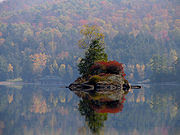
When defining islands as pieces of land that are surrounded by water, narrow bodies of water like rivers and canals are often, but not always, left out of consideration[citation needed]. For instance, in France the Canal du Midi connects the Garonne river to the Mediterranean Sea, thereby completing a continuous water connection from the Atlantic Ocean to the Mediterranean Sea. So technically, the land mass that includes the Iberian Peninsula and the part of France that is south of the Garonne River and the Canal du Midi is surrounded by water. For a completely natural example, the Orinoco River splits into two branches near Tamatama, in Amazonas state, Venezuela. The southern branch flows south and joins the Rio Negro, and then the Amazon. Thus, all of the Guianas (Guyana, Suriname, and French Guiana) and substantial parts of Brazil and Venezuela are surrounded by (river or ocean) water. These instances are not generally considered islands. However, small pieces of land bordered by rivers are considered islands.
Subscribe to:
Posts (Atom)


